

Industrial businesses around Vadodara work across many different processes. GIDC's FY2026–27 estate list includes Makarpura, Nandesari and Savli. The district economy page, last updated in 2018, and the 2020 export profile provide historical sector context. These sources help choose relevant conversations; they do not establish a company's current problems or promise results.
A useful first conversation starts inside the business. Watch one order, quotation or document pass between people. Then choose a narrow change the team can test without interrupting the rest of the operation.
The three examples below are hypothetical pilot designs. They are not client case studies, proven local failure patterns or promises of savings.
1. Keep an engineering order revision visible
Imagine a component unit receiving a revised quantity after planning has started. Sales has the new message, while the supervisor has an earlier job card. The question is whether everyone can identify the current requirement before the next step.

A narrow pilot could give each order a clear reference and version. The record would show the approved drawing reference, quantity, due date and change history. A revision would create a visible task for the people affected. They would confirm receipt and flag work already in progress for a decision.
Start with one order type. Test an unclear drawing reference, a quantity change after partial production and two changes arriving close together. The tool should retain the earlier record and show who approved the new one.
Technical suitability, production release and customer commitments remain with authorised people. A system that makes a change visible is helpful only if the business agrees who can approve it and what happens after approval.
2. Compare supplier offers without hiding the gaps
Consider a fictional purchasing team comparing quotations for the same requirement. One offer includes freight; another does not. A third quotes a different unit or lead time. A neat price table may hide those differences.
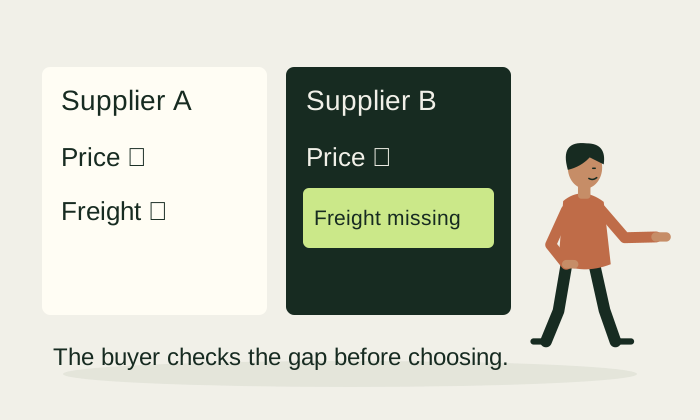
A pilot could bring the relevant details into a comparison sheet while retaining a link to each original quotation. Missing freight, different units and unclear specifications would be flagged. The procurement team would decide which comparisons are valid and what needs clarification.
Test the tool on scanned documents, revised quotes and inconsistent descriptions. Check the extraction against the original, not against an expected answer typed into the demonstration. The selected supplier, approval and reason should remain visible in the record.
This is a supporting process. It does not promise the cheapest supplier or approve a purchase on its own. Commercial terms, quality requirements and supplier experience are decisions for the business.
3. Find the approved document and its source
A fictional chemical or pharmaceutical administrative team needs a particular approved record. Similar filenames and outdated copies make retrieval difficult. The first pilot could focus on one document type, with clear version, approval status and controlled access.

A search result would point to the original record. Drafts would remain visibly different from approved documents. Staff would see the reference and last update rather than an answer detached from its source.
Tests should include an outdated copy, an unauthorised user and a missing record. The safe result for missing evidence is an unresolved question, not an invented certificate or a confident explanation.
Regulated and safety-critical requirements need qualified review. This administrative example does not validate regulatory compliance, authorise batch release or replace specialist judgement. Keep those boundaries explicit in both the scope and the interface.
How to choose among the three
Ask the staff which workflow is frequent, frustrating and well understood. Choose a task with accessible source records and a person willing to review the result. Avoid starting with the most consequential decision simply because it sounds impressive.
Measure the current task before the pilot. Then agree what correct work means, how exceptions appear and what happens when a connection fails. Include review effort, changed inputs and support requirements in the final assessment.
There may be a simpler fix. Clearer templates, naming rules or approval responsibilities can help before AI is involved. The right first project is the one the business can use and maintain.
Bring NitiSol a blank record and one description of where the work gets stuck. We can map the handoffs, choose a narrow pilot to assess and define the checks needed before wider use.
Further reading
- GIDC estate list, FY2026–27
- Vadodara district economy, page updated 2018
- Vadodara district profile, 2020
Draft for editorial and business review. Example workflows are possibilities to scope, not claims of delivered customer results.